
Copyright © 2025 www.www.ciiz-se.com.
All Rights Reserved.

Eco-friendly Industrial Vacuum Adsorption Robot System

See's Co., Ltd. is developing eco-friendly vacuum adsorption industrial robots that realize work safety and environmental protection at the same time in high-risk industrial sites. We provide efficient solutions in various industrial environments, such as automating repetitive tasks, recovering dust and abrasives, and responding to aerial work.

The "Eco-friendly Industrial Vacuum Adsorption Robot System" of Siege Co., Ltd. is a modular structure that can be applied to various sites and can be customized to customers.

✔ Technical Features and Differentiation

⦁ Self-propelled drive structure enables stable adsorption driving even on curved surfaces and vertical surfaces
⦁ Immediately suction and recover pollutants such as dust, rust, and abrasives scattered by high-performance vacuum modules
⦁ Preventing the spread of dust and wastewater to keep the working environment clean
⦁ Minimizing environmental pollution to the outside → realizing eco-friendly industrial sites
⦁ Modular control system improves maintenance and operator operation convenience
⦁ AI-based route optimization and job record storage can be supported

✔ Applications

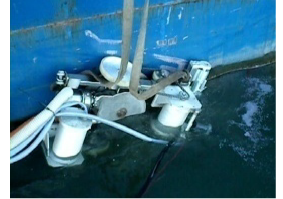
⦁ Ship exterior plate cleaning and blasting work
⦁ Cleaning the inner walls of nuclear power plants
⦁ Steel structure and bridge surface maintenance
⦁ Cleaning the exterior wall of large plant facilities
⦁ Automation of aerial and confined space operations

✔ Advantages as an eco-friendly industrial robot

⦁ Minimizes the problems of conventional blasting operations, such as fugitive dust, waste leakage, and the risk of heights.
⦁ Adsorption and recovery are performed at the same time so as not to pollute the environment around the workplace
⦁ Suitable for eco-friendly certification construction and environmental regulation response for shipbuilding and power plants

✔ Expected effect of technology application

⦁ Ensuring worker safety: Preventing fatalities by automating high-risk tasks
⦁ Increased efficiency: Greater precision and speed of repetition
⦁ Reduced operating costs: reduced labor costs and streamlined equipment maintenance

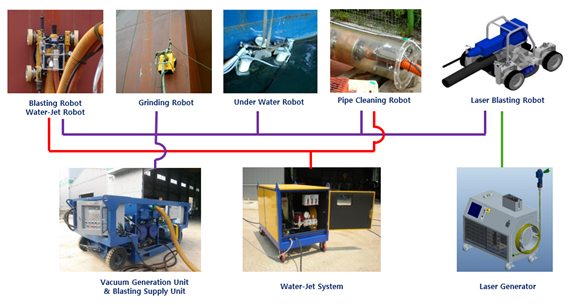
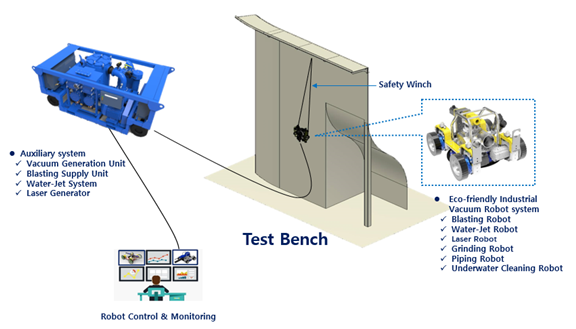
System Architecture and Modular Integration of the Industrial Vacuum Adsorption Robot System

Categories of Industrial Vacuum Adsorption Robot System

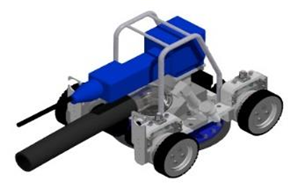
✔ Blasting Robot
Simultaneous abrasive spraying and recovery : Dust generation is minimized by spraying abrasives onto surfaces and recovering them at the same time
Vacuum-absorbing running : Stable driving and work on vertical or curved surfaces
Eco-friendly : Dust and waste generated during work are immediately recovered to keep the environment around the workplace clean.
Applications : Surface treatment and maintenance of ship envelopes, steel structures, bridges, etc.

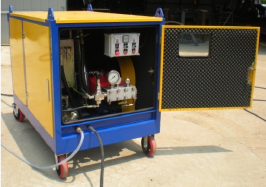
✔ Waterjet Robot
Ultra-high-pressure water jetting : Removes surface contamination by spraying high-pressure water up to 2,500kgf/cm²
Vacuum adsorption capacity : Stable work is possible even on vertical or curved surfaces with adsorption force of about 100kgf
Automatic wastewater recovery : Immediately recover wastewater generated after operation to prevent environmental pollution
Application : Surface cleaning and maintenance of ship envelopes, bridges, concrete walls, etc.

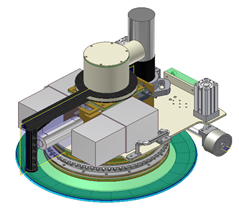
✔ Grinding Robot
Rotating polishing disc method : Rotating polishing disc is used to remove rust or dirt from the surface
Strong adsorption capacity : Stable work on vertical surfaces or ceilings with a suction force of about 230 kgf
Self-drive driving : Automatically drive and perform tasks along a set route without the need for direct operation by the operator
Applications : Pre-painting surface preparation, weld cleaning, etc.

✔ Underwater Cleaning Robot
Underwater vacuum adsorption run : Attached to a wall or structure with stable adsorption power even underwater.
Adsorption capacity : Performs cleaning and maintenance work of underwater structures with adsorption force of about 130kgf
Remote control : Remotely operated in dangerous environments such as radiation environments to ensure worker safety
Application : Cleaning and inspection of nuclear facilities, tank inner walls, underwater structures, etc.

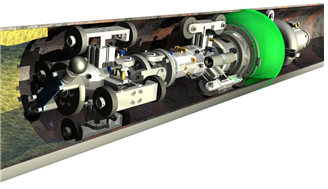
✔ Pipe Cleaning Robot
Complex treatment inside the tube : Combined operations such as waterjet, polishing, and painting can be performed with a single robot
Application diameter : Φ250~Φ900mm for various pipe diameters
Flexible travel : can pass through complex piping structures, such as 45-degree elbows
Application : Internal cleaning and maintenance of plant piping, ducts, etc.

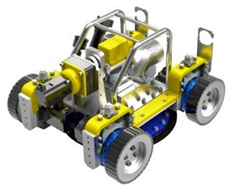
✔ Laser blasting robot
High-power laser cleaning system : 500 W laser for non-contact removal of surface contamination
Non-contact cleaning : Paint layers, oxides, and contaminants can be removed without heat deformation
Adsorption platform running : Stable driving on curved or vertical surfaces using magnet or vacuum adsorption method
Eco-friendly treatment : Automatically adsorbs contaminants generated during cleaning to minimize waste generation
Application : Ship Outer Plate, Shipyard Block, Metal Surface Pretreatment, etc.

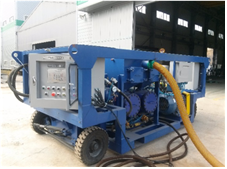
✔ Vacuum generator + blasting supply: all-in-one design

ciiz Co., Ltd. designed and manufactured an all-in-one equipment that integrates a vacuum generation unit and a blasting supply unit into one unit, supporting the adsorption maintenance of robots and the supply of abrasives at the same time, maximizing the efficiency of on-site transfer and operation.

✔ User-Friendly Modular Design

The vacuum adsorption robot system and auxiliary devices of ciiz Co., Ltd. are designed based on **Modularized Design**, and are designed to be combined in various ways according to the user's use, site conditions, and work goals, so that the optimal vacuum robot system can be supplied according to the customer's requirements.

⦁ Plug & Play structure makes it easy to connect the robot body and auxiliary devices
⦁ Site-specific work combinations: e.g. waterjet + vacuum, laser + dust collection, etc.
⦁ Independent structure for each unit for easy maintenance and transfer
⦁ Standardize interfaces for future expansion